Laser Engraving × Stone Carving
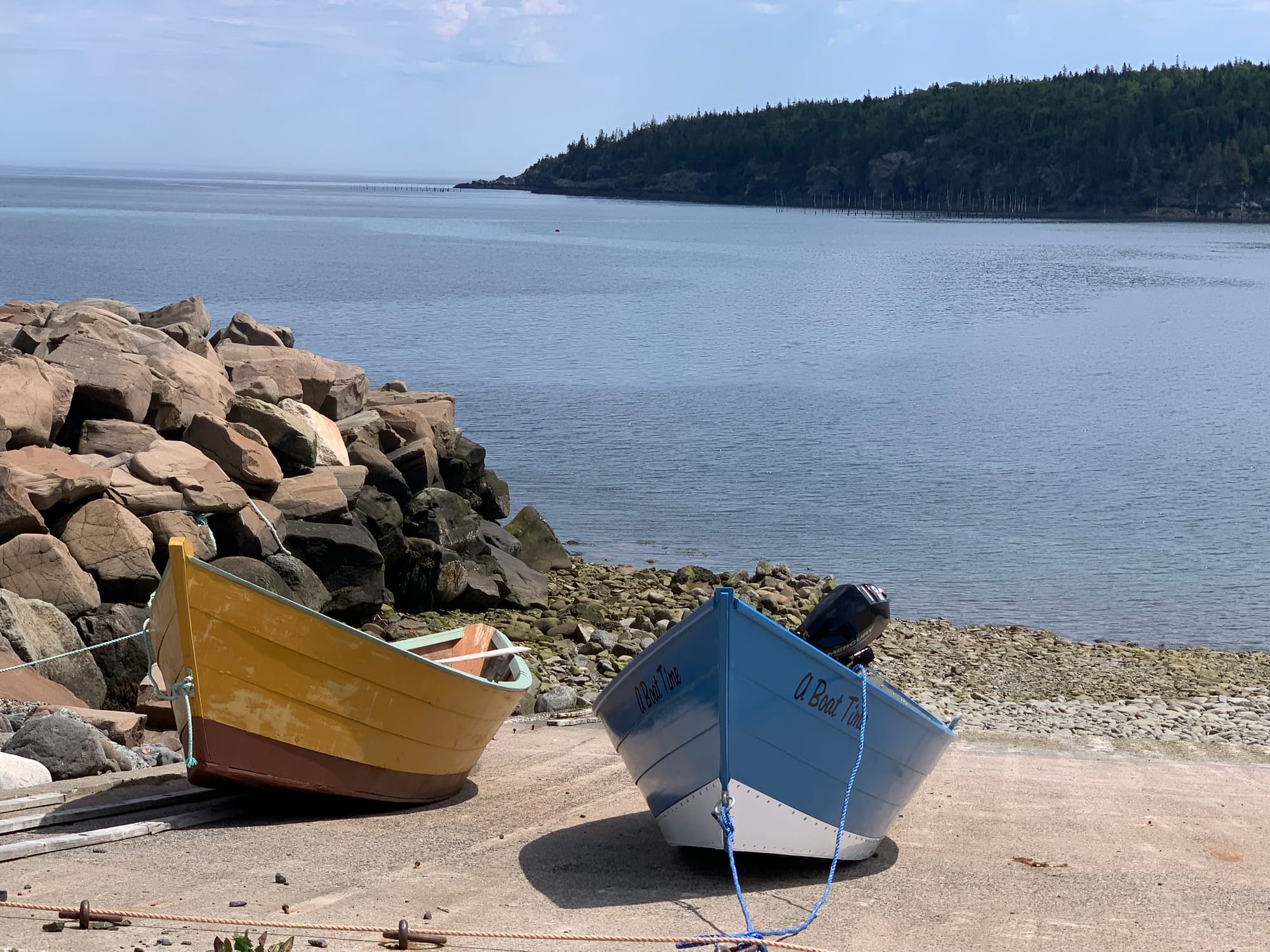
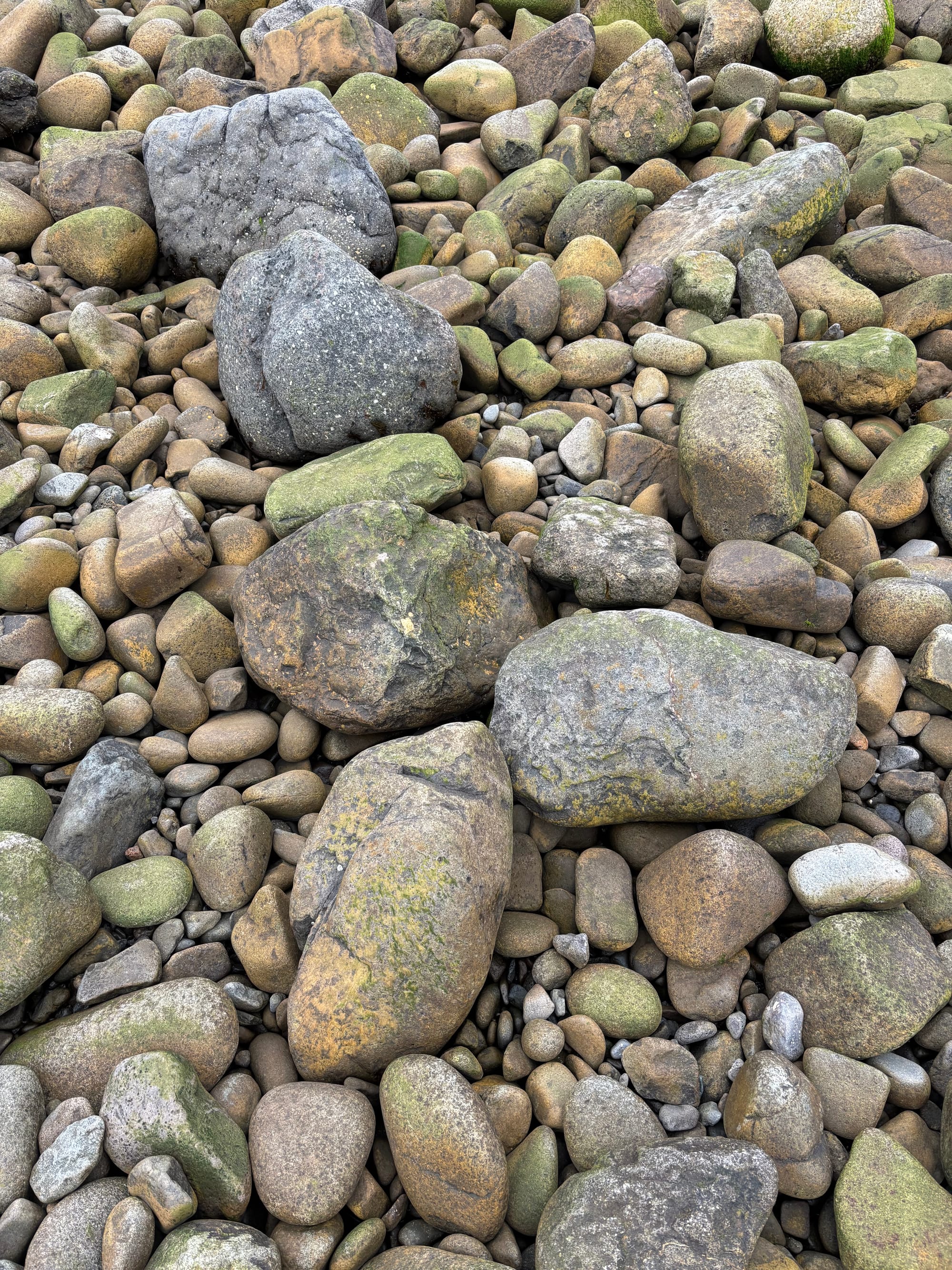
There's a rock on my windowsill from a beach on Grand Manan Island — a Canadian island in the Bay of Fundy, off the coast of Lubec, Maine. My father's family were fishermen there. When I was small we spent summers on the island, went down to the cove where the weirs were, rowed out in dories after cod and haddock and mackerel. The stones on that beach are large, rounded by some of the highest tides in the world, not yet beaten into sand. I've been looking at the one on my windowsill for years trying to figure out how to make something beautiful from it. That's what this is actually about. Not the technology — the stone.
What I want to make is simple: a whale, a lighthouse, a fisherman. Each one from a single stone off that beach. A rounded stone doesn't need to become a whale — it needs the whale that's already implied in it to be revealed. Each piece unique because each stone is unique, and the place it came from is specific and meaningful in a way no manufactured object can be. You can order a hundred resin lighthouses from China for cents each. That's a different thing entirely from a lighthouse carved from the stone of a particular cove on a particular island where your grandfather fished.
What the videos are showing
Chinese laser companies have been flooding social media with videos of laser engraving on beach stones. The material clearly responds. What they're showing is engraved imagery on a flat surface — a portrait, a motif burned into the face of a rock. It looks good. It's not sculpture.
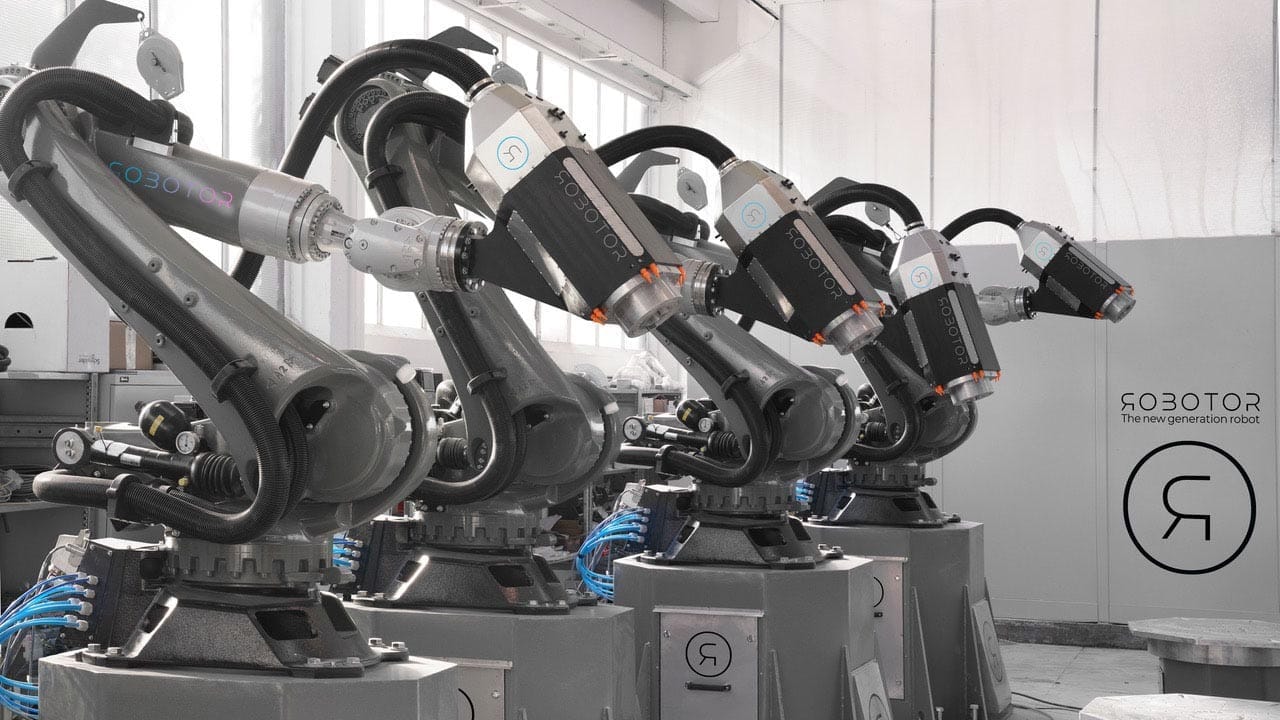
Getting to actual three-dimensional forms — things with depth and undercut, a whale tail that lifts free of the stone body — requires the laser head to reach every surface from every angle. That means a 6-axis robotic arm plus a turntable. Those two things together, with a laser head instead of a milling spindle, don't exist as a commercial product for stone. The Italian robotic stone milling companies — ROBOTOR, T&D, Roboticom — have been doing 6-axis stone work since 1996, with diamond spindles, at $100K+. Nobody has made the substitution.
Why laser changes what's possible
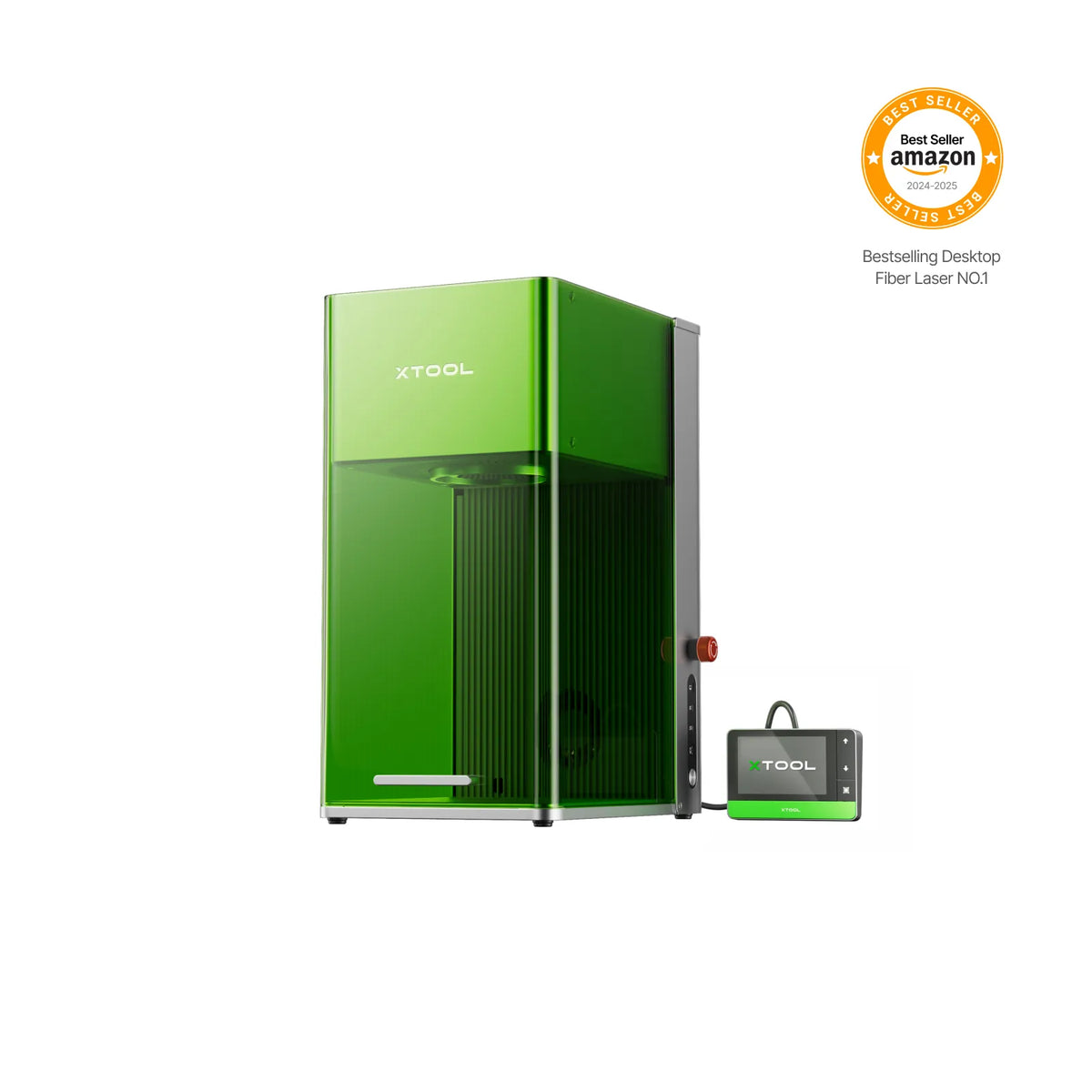
CNC stone milling needs a massive, rigid machine because cutting forces are brutal. Laser ablation removes material by vaporization — no contact, no cutting forces. The arm only needs to position the beam accurately, not resist load. A low-payload arm — used on eBay for $2-5K, or built from an open-source kit for around $1,500 — is sufficient. That's what makes this worth investigating.

The question nobody has answered
Material removal rate. Laser ablation is slow, and there's no good data on how slow when you need real sculptural depth — the 10-30mm of relief that separates decoration from art.
The physics aren't kind here. A diamond milling spindle removes stone mechanically — it gouges out cubic centimeters per pass at high RPM. Laser ablation vaporizes material a few microns at a time, pass after pass, constrained by power, by how well the stone absorbs the wavelength, and by how fast you can clear debris from the crater before it re-fuses. The Italian milling systems run 24 hours a day partly because their removal rate makes that economically rational. A laser working at the same task might need ten times longer — and if that number is bad enough, the whole idea doesn't fly regardless of how elegant the motion architecture is. That's not a reason to dismiss it; it's a reason to find out early and cheaply.
One mitigation that shifts the calculus: don't use the laser for bulk removal at all. Rough the form by hand first — angle grinder, saw — get to within a few millimeters of the intended form, and hand the rest to the laser. The laser earns its place in that final detail layer, where its non-contact nature is actually an advantage: a milling bit exerts cutting forces that can snap a thin emerging fin. A laser doesn't touch the stone. But this is assumption until tested.
How I will decide whether to build a rig
I want to spend as little as possible to find out if the laser works well enough. I'm thinking maybe I'll take some stone samples to a makerspace with a CO₂ laser — most have one. Vary the power and speed, count passes to get meaningful depth, measure with calipers. Under $100. If the numbers look hopeless, I've learned something cheap. If they look promising, then it's worth thinking about what a rig will cost.
Why the economics make this worth investigating
An AR4 — an open-source 6-axis desktop arm you build yourself — runs about $1,500 with no software licensing costs. A used industrial arm on eBay, an ABB IRB 120 or KUKA KR6, is $2-5K with significantly better positioning precision (0.01mm vs 0.5mm on the AR4). Either way, a proof-of-concept rig in the $2-6K range. That's what makes this worth investigating at all. If laser ablation required the same massive, rigid machinery as diamond milling, the Italian companies would have the whole space locked up. The reason to look at this is precisely that the machine requirements are different — and the cost difference between "possible for a serious maker" and "only accessible to industrial stone yards" is what opens the door.